13 min de leitura
How to Measure and Improve AI Search Visibility in 2026
Learn how to track AI search visibility across Google AI experiences and answer engines, then improve your citation rate using structured data, indexation hygiene, and machine-readable page architecture.
Sumário
Vá direto para a seção desejada sem percorrer o artigo inteiro.
Why this topic is rising right now
Search behavior has shifted from only blue-link clicks to mixed experiences that include AI Overviews, answer engines, and agent-style workflows. People still search, but they often get summary answers first and click later, only if the source earns trust.
Google has recently expanded guidance and reporting around generative AI visibility in Search Console, and major SEO publishers are now publishing dedicated AI visibility frameworks, citation studies, and tracking methods. This is no longer an experimental niche topic. It is a core visibility channel.
For a tools website like FreeSEOTools.com, this is a high-opportunity moment because practical utility pages and concise how-to content are the exact formats AI systems frequently cite when the page is clear, crawlable, and well structured.
What AI search visibility actually means
AI search visibility is the frequency and quality of your brand or URLs appearing inside AI-generated answers, summaries, and source lists. It is not just ranking position, and it is not only about clicks.
You should treat it as a layered metric set: mention rate, citation rate, assisted clicks, branded query growth, and conversion quality from AI-influenced sessions. This gives you a fuller view than classic rank tracking alone.
In practice, AI visibility and traditional SEO are linked. Pages that are indexable, trustworthy, and context-rich tend to perform better in both channels.
- Mention rate: how often your brand appears in AI answers
- Citation rate: how often your URL is listed as a source
- Assisted clicks: traffic arriving after AI answer exposure
- Brand lift: growth in branded searches after AI mentions
A measurement stack you can run today
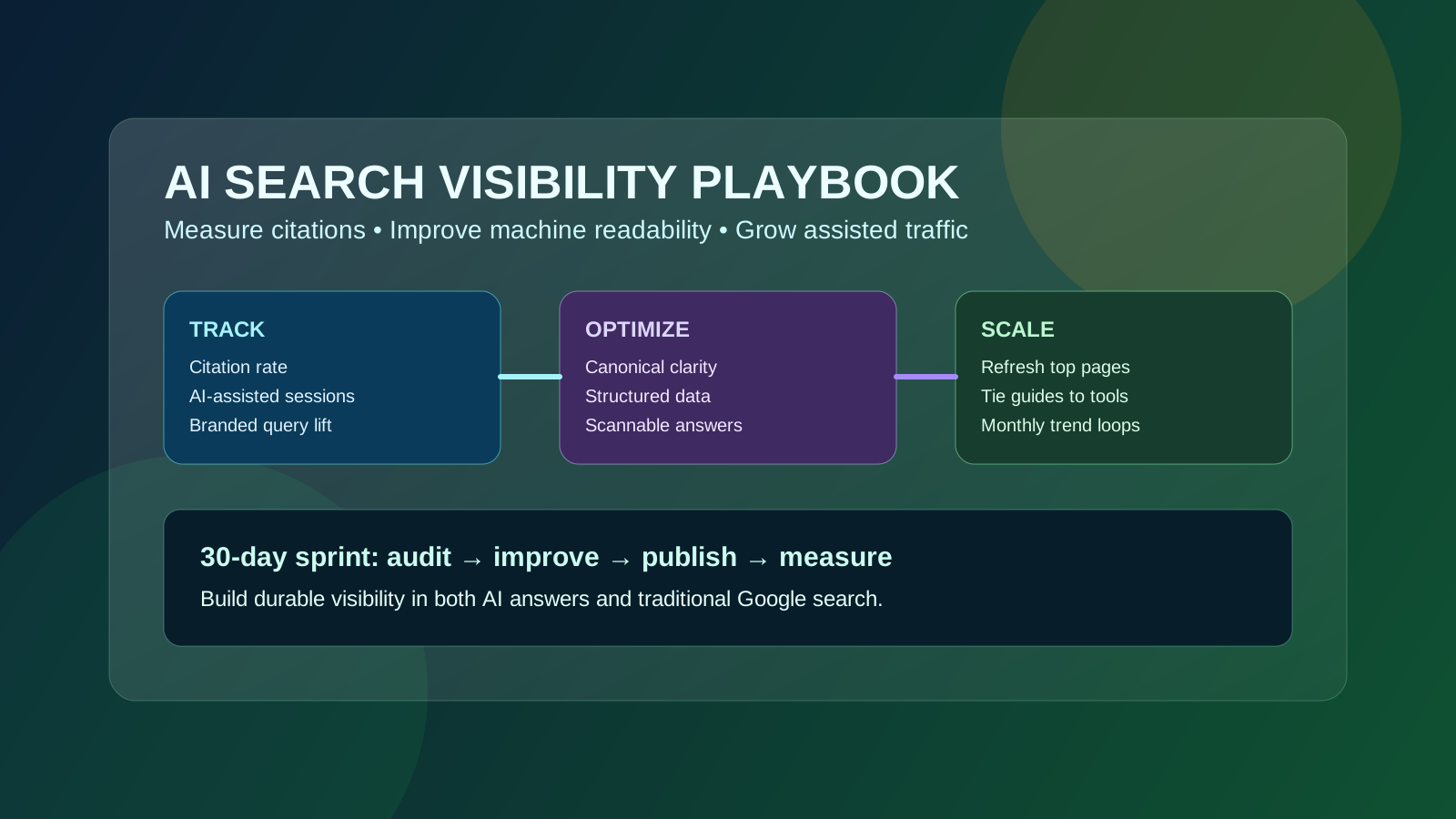
Start with first-party data before buying new tools. Use Search Console performance reporting, GA4 acquisition segmentation, and a fixed prompt panel to check how often your pages appear across AI search surfaces.
Build a weekly benchmark sheet for your priority topics and compare your citation presence against two direct competitors. Consistency matters more than perfect precision in early tracking.
The key is to track direction over time: whether your source inclusion, branded demand, and downstream actions are moving up after each content and technical update.
- Create a prompt set for your top 20 money topics
- Log source domains and cited page types weekly
- Map AI-assisted sessions to landing pages and conversions
- Review trend lines monthly, not just daily noise
Technical signals that increase citation likelihood
Most AI visibility losses are not caused by one missing trick. They usually come from weak technical hygiene: confusing canonicals, thin metadata, broken internal paths, and pages that are hard for machines to parse quickly.
Your goal is machine-readable clarity. Keep one canonical URL per page, consistent internal linking, meaningful headings, explicit schema where relevant, and straightforward page summaries near the top.
Also avoid speculative tactics that have no proven support. Focus on documented crawling, indexing, structured data, and content quality principles that already work in traditional Google Search.
Content formats that win in AI answers
AI systems frequently surface content that is direct, evidence-backed, and modular. Long pages can work, but they need scannable sections with clear answers, examples, and definitions that can be extracted without losing meaning.
For FreeSEOTools, the highest-leverage pattern is to pair a concise educational section with a usable tool and a short implementation checklist. This improves both human utility and machine interpretability.
Update existing high-intent pages before publishing endless new articles. Refreshing proven pages with new examples, dates, and source links often beats publishing another generic trend recap.
- Publish problem/solution sections with explicit steps
- Add short FAQ blocks for common edge cases
- Include source links to official documentation
- Tie each guide to a practical interactive tool
A 30-day action plan for small teams
Week 1: audit your top pages for indexation, canonical consistency, metadata quality, and schema coverage. Week 2: upgrade your top 10 pages with stronger structure and citations. Week 3: publish one high-intent AI visibility guide plus tool-led landing improvements. Week 4: review measurement trends and iterate.
If you do this consistently, you build compounding visibility in both AI and classic search. The objective is not to chase every headline. It is to become the most reliable source in your niche for specific tasks users actually need.
Perguntas frequentes
Respostas úteisIs AI search replacing classic SEO completely?
No. Classic SEO fundamentals still power discovery and trust. AI search changes how users consume results, so you need broader measurement and clearer content architecture, not a full reset.
What is the fastest win for AI visibility?
Improve existing high-intent pages first: clean canonical signals, strengthen summaries and headings, add supporting schema, and connect each page to a practical next step or tool.
Should we publish more blogs or more tools?
For a utility website, the strongest model is hybrid: fewer but better blog posts that target real problems, each tied to a high-utility tool and a measurable user outcome.
How long before we see AI visibility results?
Early signal shifts can appear within a few weeks, but stable gains usually need multiple update cycles. Track monthly trends in citation presence, branded demand, and assisted conversions.