11 min read
How to Avoid Duplicate Content on a Small Website
Learn where duplicate content usually comes from on small websites and how to reduce overlap so important pages stay distinct and easier to understand.
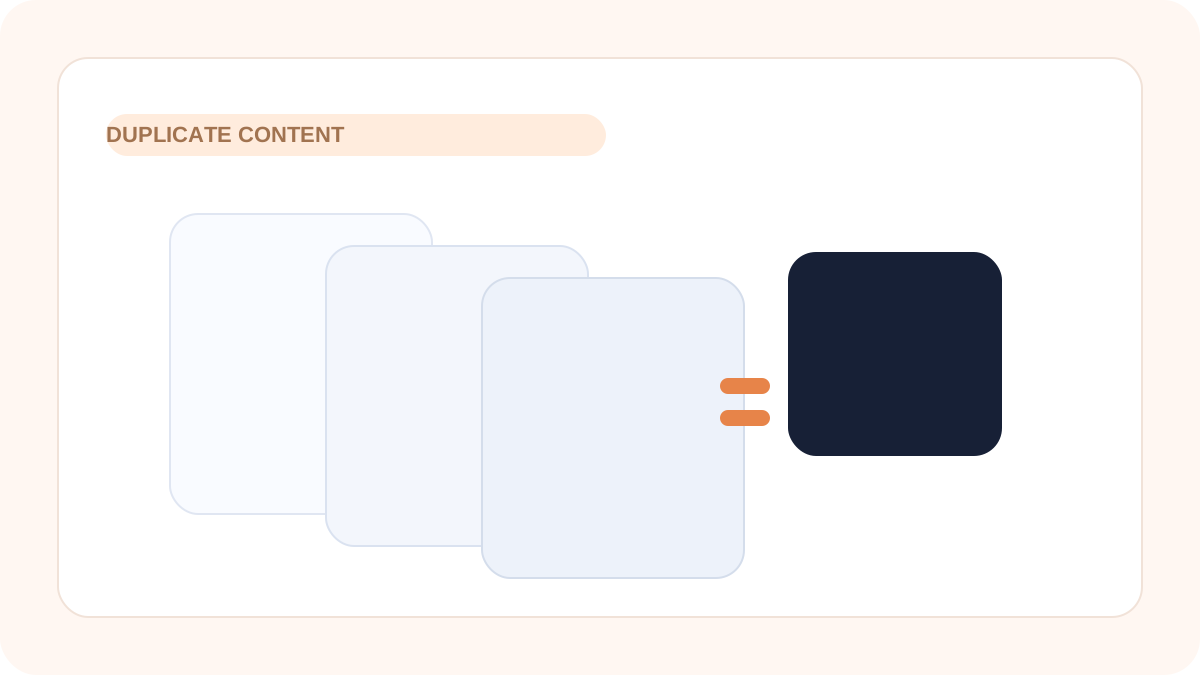
Table of contents
Jump straight to the section you want without scrolling through the whole article.
Why duplicate content shows up on small sites
Duplicate content is often accidental on smaller websites. It appears when page templates repeat the same wording, when similar pages target the same topic, or when multiple URLs expose nearly identical content.
Because the site is smaller, each weak or overlapping page has a larger impact on the overall quality impression.
The most common sources of overlap
A common source is using one page pattern repeatedly with only a few words changed. Another is publishing several pages that all chase the same search intent without making a clear distinction between them. Tag pages, filtered URLs, and alternate paths can also create duplication on the technical side.
The issue is not only exact repetition. Near-duplicate intent can be just as weak if multiple pages fail to justify why they all exist.
- Repeated templates with shallow wording changes
- Multiple pages targeting the same user question
- Alternate URLs exposing similar content
- Metadata duplicated across important pages
How to reduce the problem
Start by identifying the pages that matter most. Then compare related pages and decide whether each one deserves to exist separately. Some pages need stronger differentiation. Others should be merged, redirected, or de-emphasized.
This process usually improves the site even before any technical cleanup happens because the editorial structure becomes clearer.
What distinct pages should do differently
Each important page should have a different purpose, title angle, supporting structure, and internal-link role. If two pages cannot be described differently in plain language, they probably need more differentiation or one of them should not exist as a standalone page.
That is especially true on tool-heavy sites where many pages can easily start sounding alike.
Why this matters for site quality
Distinct content makes the site easier to trust. Visitors can tell why a page exists, and search engines can interpret the site structure with less ambiguity.
For a small website, reducing duplication is one of the clearest ways to move away from a low-value or mass-produced feel.
Frequently asked questions
Helpful answersIs duplicate content always a penalty issue?
Not in the simple sense many people assume, but duplicate or overlapping pages can still weaken clarity, crawl focus, and overall site quality.
Should I delete every similar page?
No. Some pages can stay if they truly serve different intent, but each one needs a clear reason to exist and distinct value.
Can metadata duplication be part of the problem?
Yes. Repeated titles and descriptions often signal that the underlying pages are not differentiated clearly enough.