10 min read
How to Generate an XML Sitemap for a Small Website
Learn when a small website needs an XML sitemap, what should go in it, and how to generate a clean sitemap without cluttering it with weak or duplicate URLs.
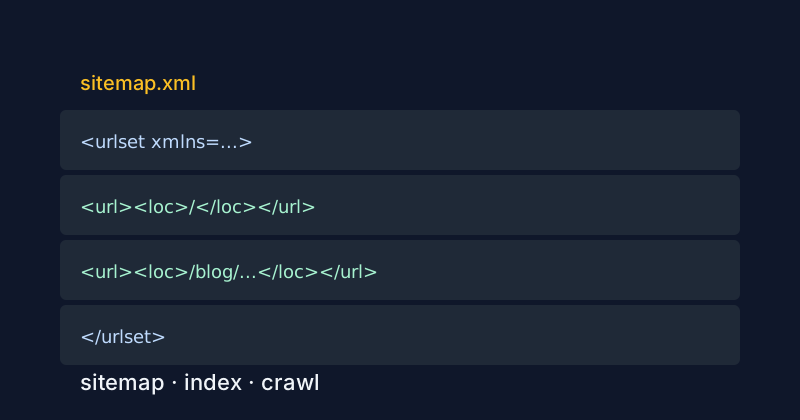
Table of contents
Jump straight to the section you want without scrolling through the whole article.
Why small websites still benefit from sitemaps
A small website can often be crawled through internal links alone, but that does not make a sitemap useless. A clean sitemap gives search engines a clearer reference point for which URLs matter and where your important content lives.
This becomes more useful when a site is new, recently restructured, or publishing articles and tool pages that you want discovered consistently. A sitemap is not a ranking trick. It is a structural aid.
What should go into the sitemap
A good sitemap contains canonical pages you actually want discovered. That usually means important blog posts, tool pages, core legal pages, and other useful public URLs that should appear in search.
The file works best when it reflects the real quality of the site. If a URL is duplicate, temporary, weak, or not meant for search, it usually does not belong there.
- Include important public URLs only
- Keep the list aligned with canonical page versions
- Remove dead, redirected, or duplicate paths
- Update the file when site structure changes
What should stay out
A sitemap is not a storage dump of every URL the site can produce. Adding weak or operational pages makes the file noisier and less trustworthy.
Common mistakes include leaving in staging URLs, filtered parameter pages, duplicated language paths, pages that should remain noindex, or sections that no longer exist.
How to generate a useful sitemap quickly
Start with the pages that matter most. If the site is small, you do not need a crawler just to create a working sitemap. In many cases, a focused list of URLs or paths is enough.
That is where an XML sitemap generator is useful. It gives you a fast way to assemble a valid sitemap file from the URLs you actually want submitted, without pulling in a lot of low-value paths by default.
Why sitemap quality matters for a site like this
When you are trying to move a site away from a low-value-content perception, structural cleanliness matters. A sitemap that highlights the strongest pages supports that effort because it reinforces what the site is really about.
For FreeSEOTools.com, that means surfacing useful tools, blog content, and trust pages cleanly instead of exposing weak or accidental URLs.
Frequently asked questions
Helpful answersDo small websites always need an XML sitemap?
Not always, but many small sites still benefit from one because it makes the important URL set clearer and easier to submit in Search Console.
Should every public page go into the sitemap?
No. Only pages you genuinely want discovered and indexed should usually be included. Weak, duplicate, or temporary URLs should stay out.
Does a sitemap fix poor internal linking?
No. A sitemap helps discovery, but it does not replace a clear site structure or good internal links.