9 min read
What Is Crawl Depth and Why It Matters
Learn what crawl depth means, why deeper pages can become weaker on small websites, and how better site structure helps important content stay accessible.
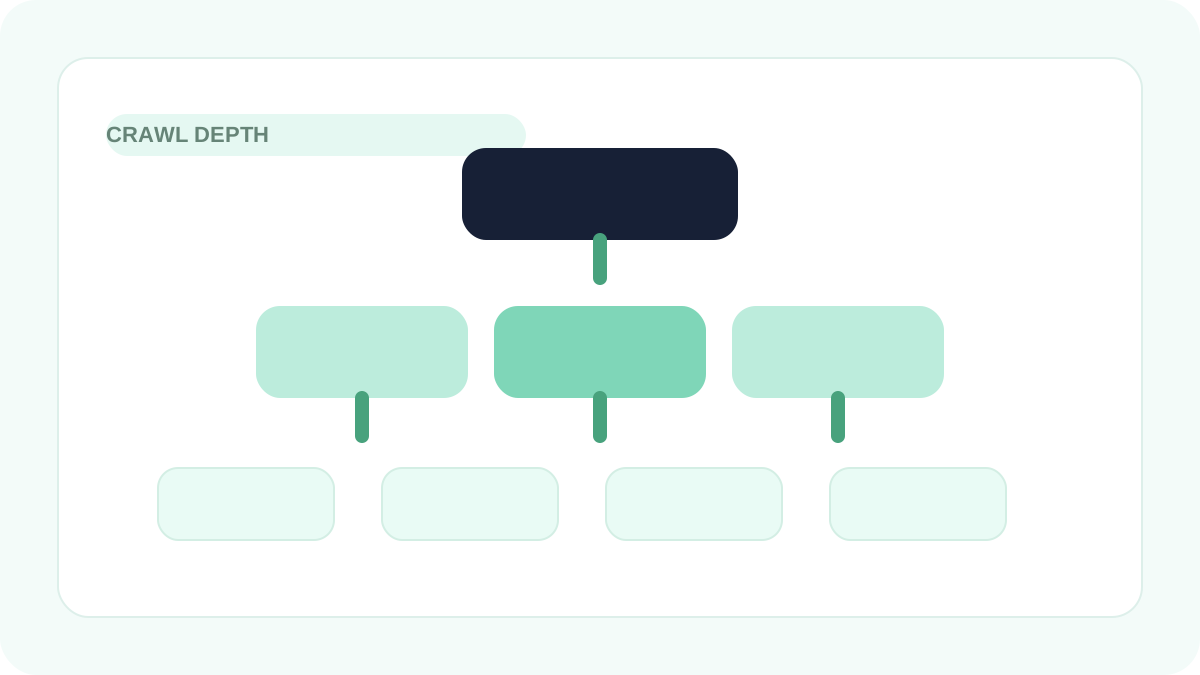
Table of contents
Jump straight to the section you want without scrolling through the whole article.
What crawl depth means in practice
Crawl depth describes how far a page sits from the most accessible parts of the site, such as the homepage, major category pages, and well-linked hub pages. The deeper a page is buried, the less naturally visible it becomes in the overall structure.
On a small site, this is usually less about massive architecture and more about whether important pages are easy to reach through normal navigation and contextual links.
Why depth can become a problem
If high-value pages are several layers away from the main site paths, they can feel less important and receive less support from the rest of the structure. Users may also find them harder to discover, which reduces the practical value of having them at all.
Deep pages are not automatically bad, but important pages should rarely be hidden by unnecessary layers.
How small websites accidentally bury pages
This often happens when content grows without a clear hub strategy. New pages get added, but they are linked only from one archive page or an old article. Over time, useful content becomes technically present but structurally weak.
Another issue is relying on sitemaps alone while neglecting contextual links and obvious navigation paths.
- Important pages linked from only one place
- Thin archive paths with no supporting context
- No hub pages connecting related topics
- Overreliance on sitemap discovery instead of visible structure
A practical way to improve crawl depth
Choose the pages that matter most for visitors and business value. Then make sure those pages are reachable from strong sections of the site through both navigation and relevant internal links.
This usually improves user experience at the same time because a clearer structure helps real people find the content faster.
Why crawl depth matters for quality too
A site with obvious paths to its best content feels more complete. The strongest pages are visible, supported, and easier to interpret in relation to the rest of the website.
That kind of structure strengthens both SEO clarity and the overall impression of site quality.
Frequently asked questions
Helpful answersIs crawl depth only a concern for very large websites?
No. Even small websites can bury important pages if the linking structure becomes messy or too indirect.
Does a sitemap solve crawl depth problems?
A sitemap helps discovery, but it does not replace strong visible architecture and contextual internal links.
Should every page be close to the homepage?
Not every page, but the most important ones should be easy to reach through sensible paths and strong supporting links.